ESA Letters in Texas From Licensed Mental Health Providers
Looking for an ESA letter in Texas for a housing request? Start with an individualized evaluation by a Texas-licensed mental health provider. If clinically appropriate, the provider may recommend an emotional support animal letter for housing. An ESA letter is not guaranteed.
Need a psychiatric service dog (PSD) evaluation? This is a separate clinical assessment of your disability-related needs. A psychiatric service dog letter or evaluation does not certify a dog, replace task training, or guarantee that a dog qualifies as a service animal.
Real people, ready to helpCall, text or WhatsApp our team
Clear expectationsNo guarantees or shortcuts
STATE-SPECIFIC EXPERTISE. ONE TRUSTED NETWORK.
The TSA Network
Clinician-Designed. State-Focused. Built Around You.
The TSA Network brings together Texas Service Animals, Florida Service Animals, and Georgia Service Animals under one shared commitment: making professional ESA letter and Psychiatric Service Dog evaluations more accessible, personalized, and transparent.
Built from over a decade of clinical experience, our network connects clients with state-licensed professionals who understand their individual needs and applicable housing accommodation requirements.
Unlike a one-size-fits-all approach, we focus on individualized evaluations, clear pricing, professional documentation, and continued accommodation support when needed.
Choose a state site for its local information, pricing, and application details.
SIMPLE, SUPPORTIVE, AT YOUR PACE
A clear process. Room to ask questions.
You choose whether to continue. Your evaluation is personal, and documentation is provided only when clinically appropriate.
01
Apply for an ESA or PSD evaluation
The application asks whether you are seeking an ESA housing letter or a PSD evaluation; the provider decides whether an ESA letter or PSD letter is clinically appropriate. Review the provider evaluation fee before deciding whether to continue.
Payment isn’t required to ask general questions by phone, text, WhatsApp or email. Paid clients receive priority for callback scheduling and inquiry responses.
Payment covers a professional evaluation with a Texas-licensed provider for an ESA housing letter or psychiatric service dog (PSD) documentation. If your provider determines documentation is clinically appropriate, the service includes preparation of the applicable ESA letter or PSD letter and housing verification support, including eligible forms or verification requests. Your provider makes the independent clinical decision; documentation is not guaranteed.
MOST POPULAR
1 Animal
One ESA
$169$199
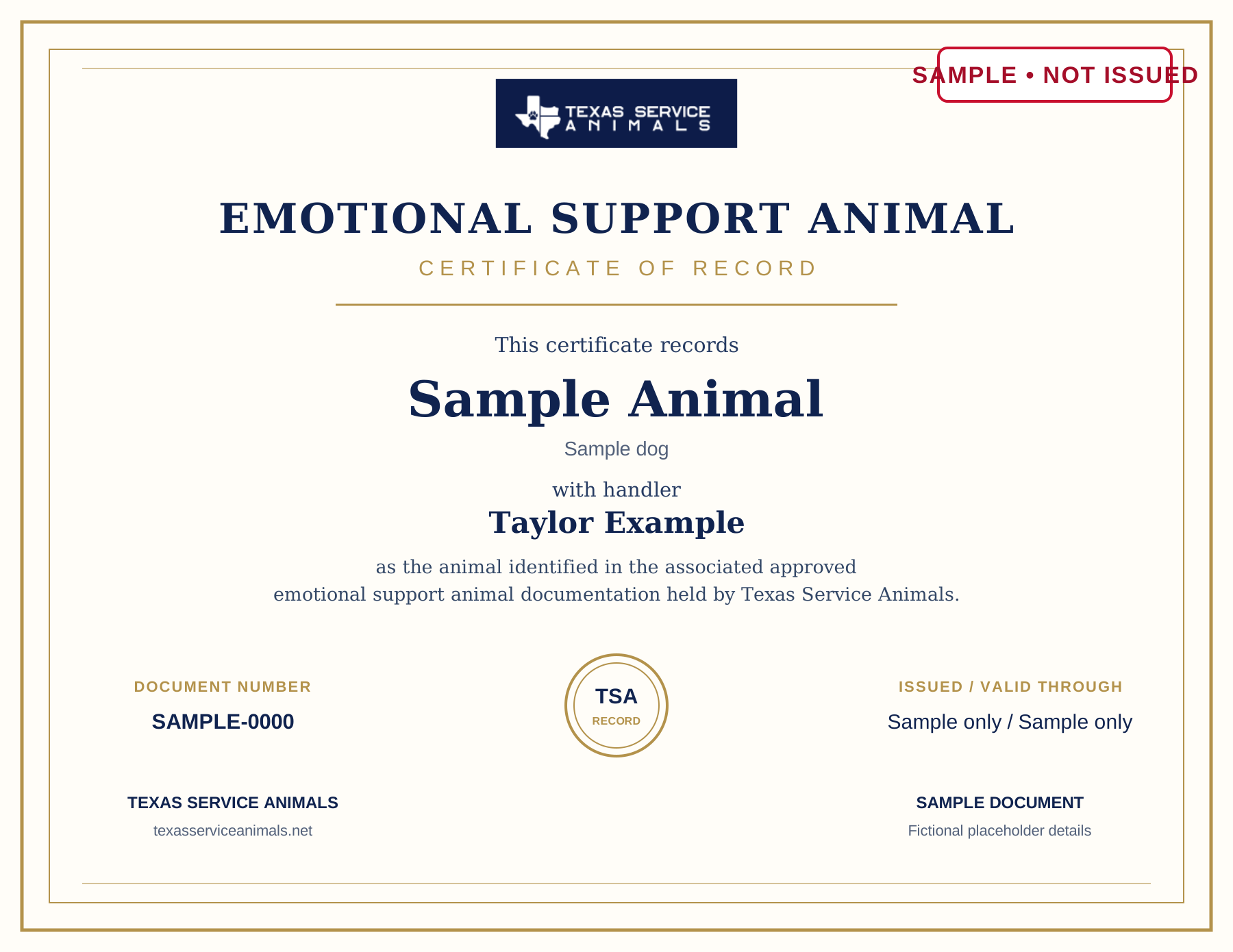
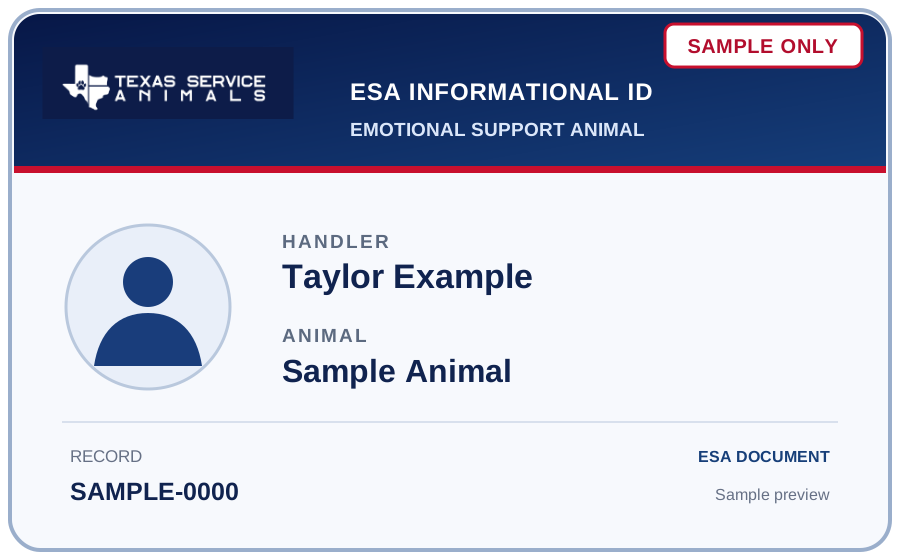
COMPLIMENTARYESA certificate + ID included
When a letter is issued · informational only
Individual evaluationReview by a Texas-licensed provider.
ESA housing letterPrepared when clinically appropriate.
Housing supportOne extra accommodation form plus landlord and third-party verification help when needed.
Included follow-upUp to two wording-only revisions; no diagnosis on housing documentation.
Revisions cannot change clinical findings or substitute another animal.
Certificates and ID cards are complimentary informational items. They are not government credentials, proof of a disability, proof of service-dog training, or a substitute for clinical documentation.
If the provider determines documentation is not clinically appropriate, the evaluation fee is refunded in full under the published service terms.
See all plans Compare ESA, multi-animal and PSD evaluation options.
Paid evaluations include year-round support and private client-record registration, which is not an official or government registry. Documentation is not guaranteed. Housing providers make their own accommodation decisions under the rules that apply.
VERIFIED CLIENT FEEDBACK
What Texas clients say
Read public Google reviews about their experience with Texas Service Animals.
An ESA letter or a PSD letter is only one part of the picture. We believe you deserve honest information about what this documentation can and cannot do before you make a decision.
What to expect from a legitimate ESA or PSD evaluation.
A legitimate ESA letter evaluation or PSD letter evaluation is an individualized clinical process, not an animal registry or a guarantee of documentation. A Texas-licensed provider makes the clinical decision, and housing providers separately review accommodation requests.
01 · PROVIDER
Individual clinical review
A Texas-licensed mental health professional considers your circumstances and independently decides whether an ESA letter or PSD letter is clinically appropriate.
02 · HOUSING
A separate accommodation review
HUD guidance says housing providers generally must grant accommodations that meet the applicable criteria. Denials are uncommon but can occur; the provider reviews each request individually, so approval is not guaranteed. Read HUD’s assistance-animal guidance.
03 · SERVICE DOGS
Training remains essential
A PSD letter does not train or certify a dog. Under the ADA, a service dog is individually trained to perform disability-related work or tasks.
A FEW THINGS PEOPLE ASK
Questions, answered with care.
Payment isn’t required to speak with a representative. Paid clients receive priority for callback scheduling and inquiry responses.
Start with the application. If an evaluation appears appropriate, you may choose to continue with a Texas-licensed mental health provider. The provider may prepare an ESA housing letter when the evaluation supports it.
Yes. Payment is not required to speak with a representative. You’re welcome to call, text, WhatsApp or email us with general questions. Paid clients receive priority for callback scheduling and inquiry responses. Clinical questions and decisions are handled by your licensed provider.
No. The provider uses independent clinical judgment, so not everyone will qualify. Documentation is issued only when clinically appropriate.
No. An ESA does not have the same public-access rights as a trained service dog under the ADA. ESA letters discussed here are for housing requests.
No. A PSD letter does not certify, register or train a dog. The dog must still be individually trained to perform disability-related work or tasks.
ROOTED IN TEXAS ★
Here for Texans, wherever home is.
Our services are focused on Texas residents, with local guidance for communities across the state.
Hi, I’m Eddie, founder of Texas Service Animals. After more than 10 years of clinical practice, I founded this company with a simple belief: the love and companionship of an animal can make a meaningful difference in a person’s emotional well-being.
Combining my clinical experience with my genuine love for animals, I created Texas Service Animals and the TSA Network from a clinician’s perspective, with a commitment to making professional evaluations accessible, compassionate, and trustworthy.
As a former clinician, I personally built our provider network by recruiting experienced therapists who share a deep respect for animals and a commitment to their well-being. Our licensed providers conduct individualized evaluations and make independent clinical decisions.
Our mission is simple: to provide a trusted, compassionate experience that honors the powerful bond between people and the animals that bring comfort, stability, and support to their everyday lives.
Start with a question. Take it one step at a time.
Payment isn’t required to speak with a representative. You’re welcome to call, text, WhatsApp or email us. Paid clients receive priority for callback scheduling and inquiry responses.